Physical Address
304 North Cardinal St.
Dorchester Center, MA 02124
Physical Address
304 North Cardinal St.
Dorchester Center, MA 02124


Stop bleeding money in crypto futures. These seven deadly mistakes are costing you thousands – but the fixes are simpler than you think. 🚀
Most crypto futures traders fail within their first year. Not because they're unlucky. Not because the market's rigged. But because they keep making the same preventable mistakes over and over again.
You're about to discover the exact errors that separate losing traders from consistently profitable ones. Each mistake comes with a battle-tested fix that professional traders use to protect and grow their capital.
Ready to stop throwing money away? Let's dive in. 💎
The brutal truth: Jumping into crypto futures without a trading plan is like driving blindfolded on a highway. You might survive for a while, but eventually, you're going to crash.
Here's what happens when you trade without a plan:
✅ You make impulsive decisions based on emotions
✅ You have no idea when to enter or exit trades
✅ You risk way more than you should on single positions
✅ You chase shiny objects instead of sticking to proven strategies
The million-dollar question: If you don't know where you're going, how will you know when you get there?
Every profitable trader has a written plan that covers:
Entry Criteria:
Exit Strategy:
Risk Management:
Pro tip: Write your plan when the markets are closed and emotions are calm. Stick to it religiously when volatility hits. 📊

This one mistake destroys more accounts than anything else. Leverage is like a loaded weapon – incredibly powerful but deadly in the wrong hands.
Here's the math that'll shock you:
Reality check: That "small" 5% move happens multiple times per day in crypto. Using high leverage turns normal market fluctuations into account killers.
The 5-3-1 Rule that saves accounts:
Smart position sizing formula:
Risk per trade = Account size × 2% ÷ (Entry price – Stop loss price)
Example:
This keeps you in the game when others get liquidated. 🛡️
"I'll just watch the charts and exit manually." Famous last words of every blown account.
The market doesn't care about your schedule. Crashes happen at 3 AM. Flash crashes last seconds. By the time you wake up or refresh your browser, your position could be down 50%.
Without stop-losses, you're gambling, not trading.
The 2% Rule:
Never risk more than 2% of your account on any single trade. Set your stop-loss before you enter the position, not after.
Stop-loss placement strategies:
✅ Below recent support levels for longs
✅ Above recent resistance levels for shorts
✅ Based on Average True Range (ATR) for volatility-adjusted stops
✅ At technical pattern invalidation points
Pro tip: Use OCO (One-Cancels-Other) orders to set both take-profit and stop-loss simultaneously. This removes emotion from the equation completely.
Fear and greed are account killers. When emotions take the wheel, logic gets thrown out the window.
Fear makes you:
Greed makes you:
The 24-Hour Rule:
Never make major trading decisions when you're emotional. Wait 24 hours, then reassess with a clear head.
Emotion-killing strategies:
✅ Pre-define all trade parameters before entering
✅ Use position sizing that doesn't stress you out
✅ Keep a trading journal to identify emotional patterns
✅ Take breaks after big wins or losses
Mental game changer: Treat each trade like you're managing someone else's money. You'd never gamble with your friend's cash, right?

Making money isn't about being right all the time. It's about making more when you're right than you lose when you're wrong.
The math that matters:
Even losing 60% of your trades, you're still making money with proper risk-to-reward management.
Never take a trade unless your potential profit is at least 2x your potential loss.
Trade setup example:
Advanced tip: Look for 3:1 or 4:1 setups during trending markets. These high-probability, high-reward trades can make your month in a single position.
Perpetual futures aren't free money. Those funding rates you're ignoring? They're slowly bleeding your account dry.
How funding works:
Example disaster: You're long Bitcoin with $10,000 position. Funding rate hits 0.1% every 8 hours. That's $30 every 8 hours, or $90 per day in fees. Over a month? $2,700 in funding fees alone.
Funding rate strategies:
✅ Check funding rates before entering positions
✅ Consider closing positions before high funding periods
✅ Use funding arbitrage opportunities (get paid to hold positions)
✅ Switch between spot and futures based on funding costs
Pro move: When funding rates get extremely high (>0.1%), consider taking the opposite position to collect funding payments.
More trades don't equal more profits. Quality beats quantity every single time.
The overtrading spiral:
Chasing losses turns small setbacks into account disasters.
The 3-Trade Rule:
Maximum 3 positions open simultaneously. This forces you to be selective and focus on your best setups.
Daily limits that save accounts:
✅ Maximum 5 trades per day
✅ Stop trading after 3 consecutive losses
✅ Take mandatory breaks after hitting daily loss limits
✅ Review and analyze every trade before the next one
Recovery protocol: After any significant loss, take at least 24 hours to analyze what went wrong. Don't jump back in immediately.
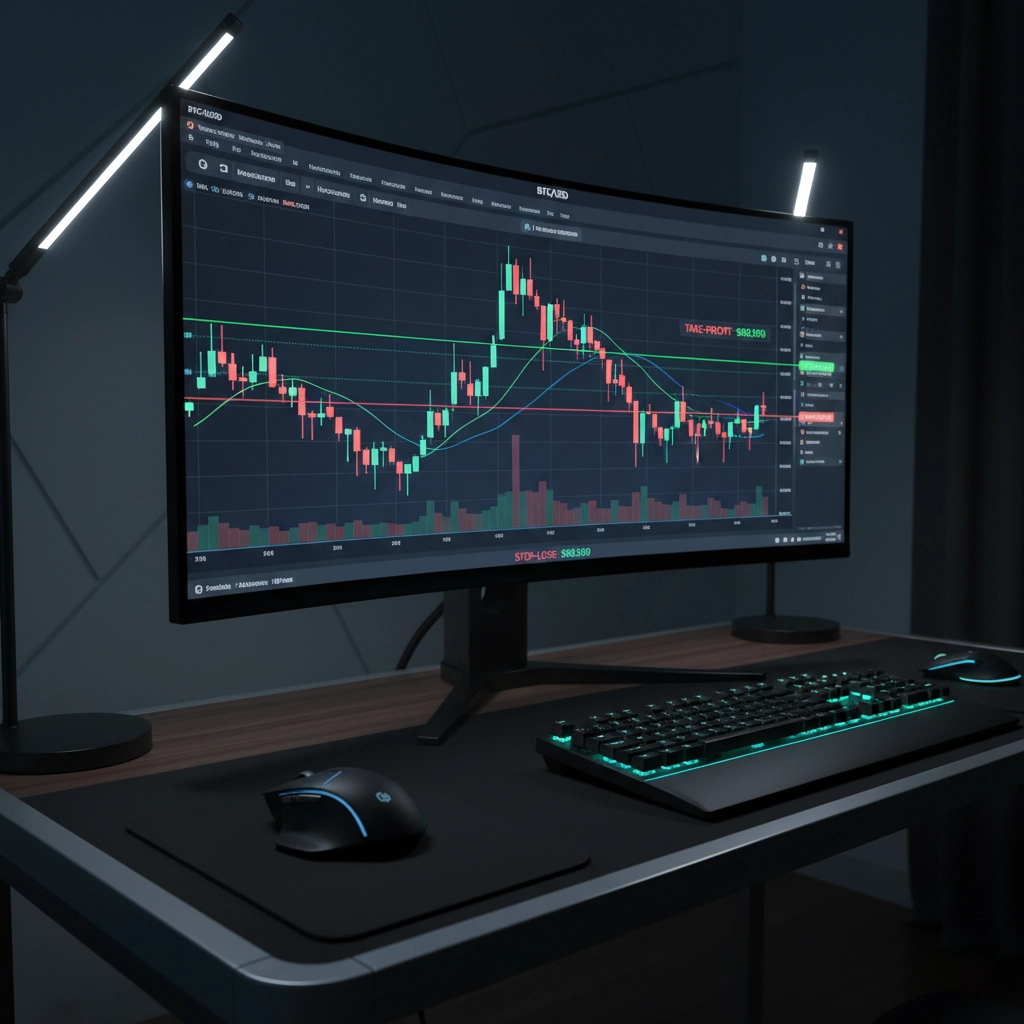
These seven mistakes separate winners from losers in crypto futures. Every professional trader has made these errors. The difference? They learned from them and built systems to prevent repeating them.
Your action plan:
✅ Create a written trading plan this week
✅ Implement proper position sizing and stop-losses
✅ Track your risk-to-reward ratios
✅ Monitor funding rates before every trade
✅ Limit your daily trades and stick to quality setups
Remember: Trading isn't about being perfect. It's about being consistently profitable over time. Fix these seven mistakes, and you'll join the small percentage of traders who actually make money in crypto futures.
The market will always be there. Your capital won't be if you keep making these costly errors. 💎
Start implementing these fixes today. Your future self (and your bank account) will thank you.