Physical Address
304 North Cardinal St.
Dorchester Center, MA 02124
Physical Address
304 North Cardinal St.
Dorchester Center, MA 02124


Leverage is a double-edged sword. 🗡️
It can multiply your gains faster than you ever imagined: or wipe out your entire account in seconds. The difference between these two outcomes? Understanding the fundamentals before you dive in.
If you've been curious about crypto futures trading but feel overwhelmed by terms like "liquidation," "margin," and "100x leverage," you're in the right place. This guide breaks down everything you need to know to start trading futures without becoming another liquidation statistic.
Let's get you trading smarter, not harder. 🚀
Crypto futures trading lets you secure the right to buy or sell a cryptocurrency at a predetermined price at a future date. Unlike spot trading where you own the actual asset, futures contracts are agreements: and they come with some serious advantages.
Here's what makes futures trading exciting:
✅ Profit from rising AND falling markets (go long or short)
✅ Use leverage to control larger positions with smaller capital
✅ Trade 24/7 in the most liquid markets on the planet
✅ Access advanced strategies professional traders use daily
The catch? With great power comes great responsibility. Leverage amplifies everything: your wins AND your losses. That's why mastering the fundamentals is non-negotiable.
Before you place your first trade, you need to understand these two critical concepts.
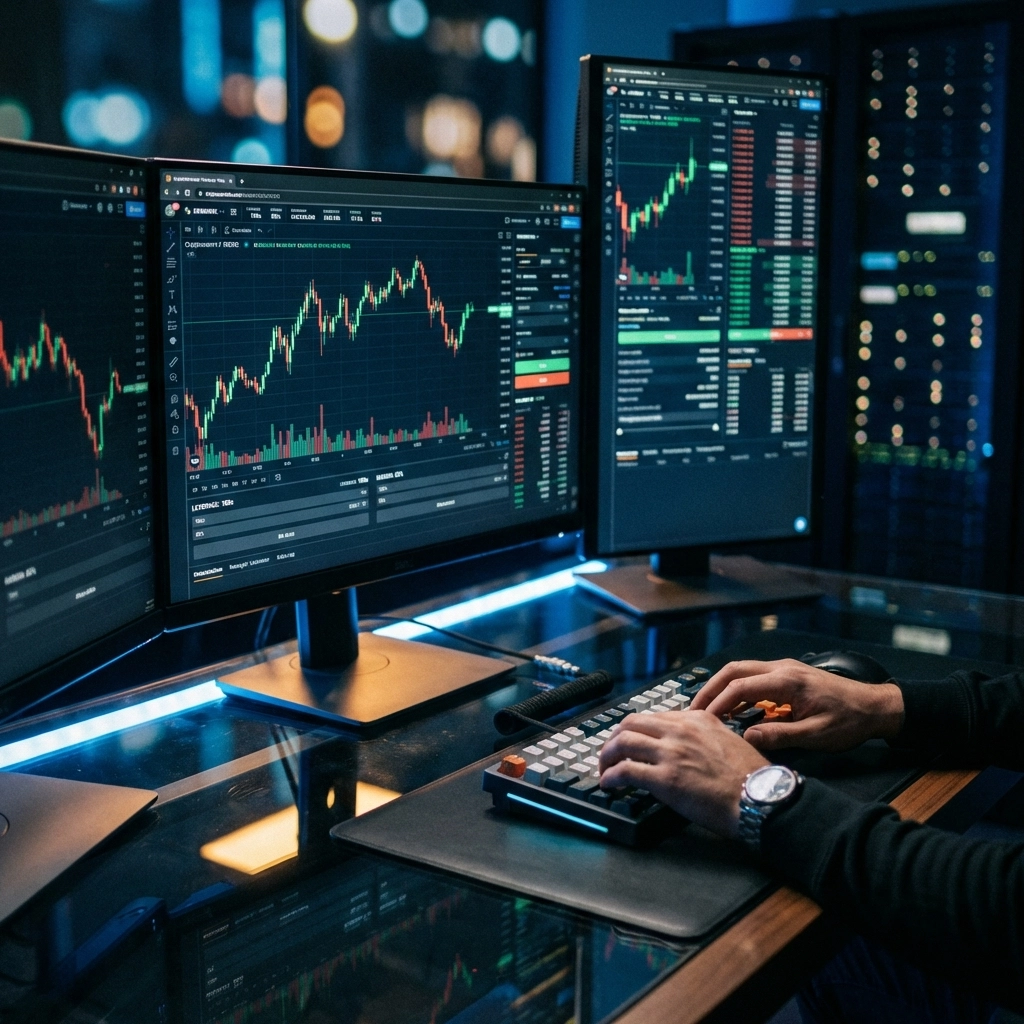
Leverage allows you to control a position larger than your actual capital. If you have $1,000 and use 10x leverage, you're controlling a $10,000 position.
Platforms offer varying leverage levels: some up to 100x or even 125x. But here's what beginners need to understand:
⚠️ Higher leverage = higher liquidation risk
A 100x leveraged position only needs a 1% adverse price move to liquidate your entire account. That's not trading: that's gambling.
Pro tip: Start with 2x-5x leverage maximum. Many successful traders never go above 10x, even after years of experience.
Margin is the minimum equity required in your account to open and maintain a position. Think of it as collateral.
When your position loses value, your account equity decreases. If it falls below the margin requirement, your exchange will automatically liquidate your position to recover their funds. You lose your capital. Game over.
This is why understanding margin requirements is absolutely critical before you start trading.
Ready to get started? Here's your roadmap to placing your first futures trade safely.
Open an account on a reputable futures trading platform. Complete KYC verification to enhance security and unlock higher trading limits. Most platforms require you to specifically enable futures trading and agree to additional terms.
Transfer funds into your dedicated futures wallet. Most traders use stablecoins like USDT or USDC for margin trading: this makes calculating your P&L straightforward and removes the variable of your collateral changing value.
Choose a contract that matches your trading thesis. For beginners, stick to major pairs like BTC/USDT or ETH/USDT: these have the best liquidity and tightest spreads.
Adjust your leverage based on your risk tolerance:
✅ Beginner: 2x-3x leverage
✅ Intermediate: 5x-10x leverage
✅ Advanced: 10x-20x leverage (with strict risk management)
This is where futures trading gets powerful:
Being able to profit in both market directions is what separates futures traders from spot-only traders.
Here's the truth nobody tells beginners: the traders who survive long-term aren't the best at picking winners: they're the best at managing risk.
Never risk more than 1-2% of your total account on any single trade. This means if you have a $10,000 account, your maximum loss per trade should be $100-$200.
This sounds conservative. It is. That's the point. You'll live to trade another day.
A stop-loss order automatically closes your position if the market moves against you by a predetermined amount. This is your insurance policy against catastrophic losses.
Set your stop-loss BEFORE entering any trade. Not after. Not "when you remember." Before.
Professional traders treat stop-losses as sacred. You should too.
Don't let winning trades turn into losers. Set take-profit orders to automatically exit when your target price is reached. Remove emotion from the equation.
Futures trading isn't set-and-forget. Track your margin levels, understand how close you are to liquidation, and be ready to reduce position size if things go sideways.
Understanding order types gives you more control and can save you from costly mistakes.
| Order Type | What It Does |
|---|---|
| Market Order | Executes immediately at best available price |
| Limit Order | Only executes at your specified price or better |
| Stop-Loss Order | Automatically sells if price drops to your set level |
| Stop-Limit Order | Combines stop-loss with price limit for more control |
For beginners: Use limit orders when possible. Market orders can suffer slippage during volatile moves, eating into your profits.

Most reputable platforms offer demo trading or paper trading environments. This is where you can practice strategies without risking real money.
Use demo trading to:
✅ Understand how liquidation actually works
✅ Test your risk management system
✅ Build confidence before going live
✅ Learn the platform interface inside and out
Don't rush this phase. The market will be there when you're ready.
Learn from others' expensive lessons:
Each of these mistakes has liquidated countless traders. Don't add your name to the list.

Crypto futures trading offers incredible opportunities: the ability to profit in any market direction, the power of leverage, and 24/7 access to global markets. But these same features can destroy unprepared traders.
Your roadmap to success:
✅ Start with low leverage (2x-5x maximum)
✅ Never skip your stop-loss
✅ Risk only 1-2% per trade
✅ Practice on demo accounts first
✅ Trade assets you actually understand
✅ Prioritize capital preservation over quick profits
The traders who build real, lasting wealth in crypto futures aren't the ones swinging for home runs on every trade. They're the ones who protect their capital, manage risk religiously, and stay in the game long enough to compound their gains.
Ready to level up your trading education? Visit BitProfits for more strategies, community support, and resources designed for traders just like you.
Real trades. Big profits. Let's get it. 🚀