Physical Address
304 North Cardinal St.
Dorchester Center, MA 02124
Physical Address
304 North Cardinal St.
Dorchester Center, MA 02124


Stop bleeding money on stupid leverage mistakes. 💸
You're here because you've probably blown an account (or three) trying to "get rich quick" with maximum leverage. Maybe you've watched your portfolio disappear faster than your morning coffee gets cold. ☕️
Here's the brutal truth: 95% of leveraged traders fail because they ignore basic risk management rules that actually work.
But you don't have to be part of that statistic. ✅
The difference between traders who consistently profit and those who consistently lose isn't luck, timing, or some secret indicator. It's following these 5 non-negotiable risk management rules that separate the pros from the gamblers.
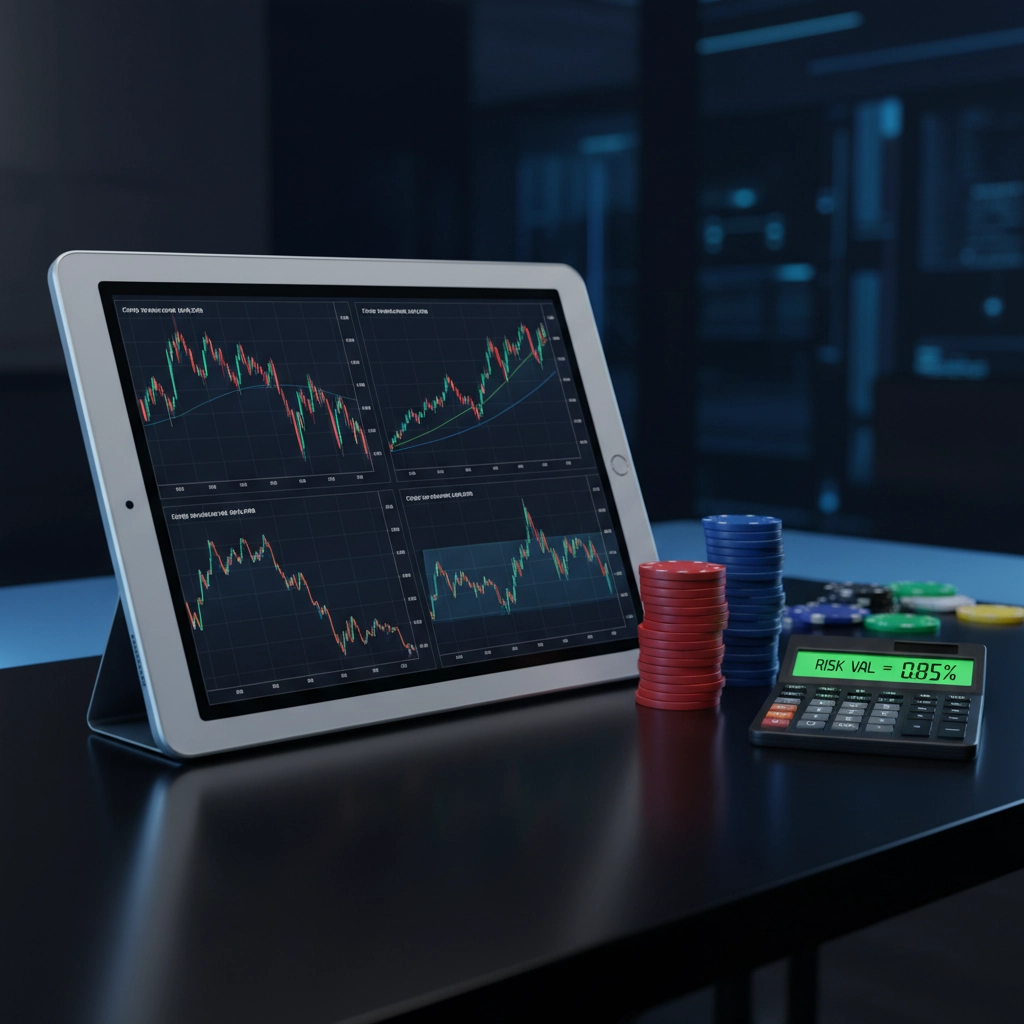
Never risk more than 1% of your trading capital on any single trade. Period.
This isn't some conservative suggestion – it's your survival mechanism. Professional traders at prop firms follow this rule religiously because it's the difference between having a bad day and having a career-ending disaster.
Here's the math that'll save your account:
Why this works: Even if you have 10 losing trades in a row (which happens to everyone), you'll only lose 10% of your account instead of being completely wiped out. 🚀

Most failed traders risk 5-10% per trade because they want to "make it back faster." Don't be most traders. Be the 5% who actually make money consistently.
Pro tip: Calculate your position size BEFORE you enter any trade. Your stop-loss distance determines your position size, not your confidence level.
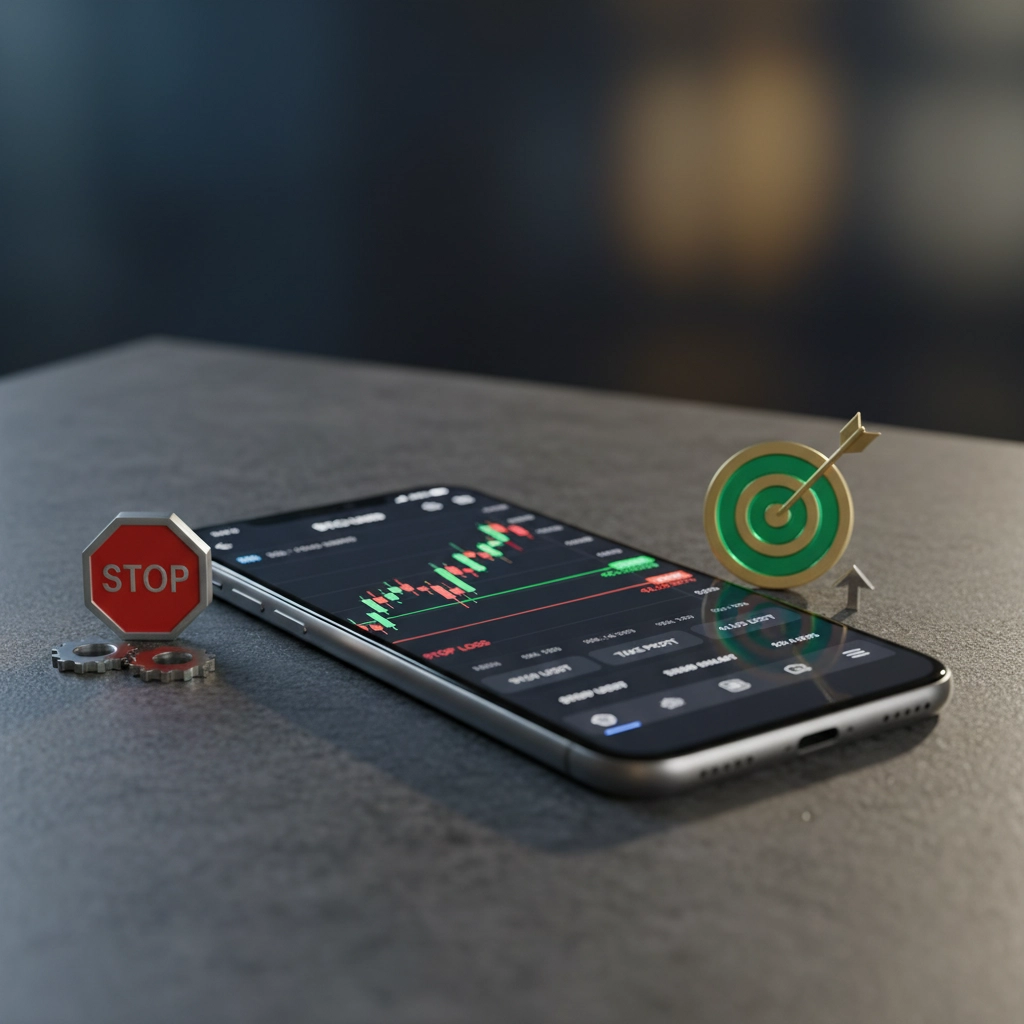
Set your stop-loss and take-profit BEFORE you enter the trade. No exceptions.
Emotions destroy trading accounts faster than bad market analysis. When you're watching your position move against you, your brain starts playing tricks:
Stop-loss orders eliminate emotions from your trading. They're automatic safety nets that execute your exit strategy when you're not thinking clearly.
Here's your action plan:
✅ Set stop-loss at your predetermined risk level (1% of account)
✅ Set take-profit at 2-3x your risk amount (2-3% gain target)
✅ Walk away from the screen once orders are placed
Real example: You buy Bitcoin futures with a $100 risk tolerance. Set your stop-loss to trigger at $100 loss and take-profit at $200-300 gain. This gives you a positive risk-reward ratio that works long-term.
Your position size should shrink when volatility increases, regardless of how "sure" you feel about a trade.
The biggest mistake leveraged traders make? Taking massive positions during high-volatility events like:
Smart position sizing framework:
Example breakdown for a $100,000 account:
Remember: Big moves create big opportunities AND big risks. Don't let FOMO destroy your disciplined approach. 💎
Always use isolated margin instead of cross margin when available.
This is the difference between losing on one trade versus losing your entire account on one trade.
Cross margin = Playing with fire 🔥
Isolated margin = Smart protection 🛡️
How to implement isolated margin:
✅ Check if your broker offers isolated margin mode
✅ Set isolated margin for each new position
✅ Monitor margin levels for each individual trade
✅ Never let one position access more than your predetermined risk
Most prop firms actually require isolated margin because it prevents catastrophic account blowouts. Follow their lead.
Higher leverage isn't "better" – it's just more dangerous.
New traders see 100:1 leverage and think "more profit potential!" Experienced traders see 100:1 leverage and think "more ways to lose money fast."
Leverage guidelines that actually work:
Beginners (0-6 months):
Intermediate (6-18 months):
Advanced (18+ months):
Never use maximum available leverage. Just because your broker offers 100:1 doesn't mean you should use it. That's like driving 150 mph just because your car can do it. 🏎️
Pro insight: Most successful prop traders use 10:1 leverage or less, even when they have access to much higher ratios. They understand that consistent small gains beat spectacular crashes every time.

Before entering ANY leveraged position, run through this checklist:
✅ Position size calculated using 1% rule
✅ Stop-loss set at predetermined level
✅ Take-profit set at 2-3x risk amount
✅ Isolated margin enabled
✅ Leverage ratio appropriate for experience level
✅ Market volatility assessed
✅ Economic calendar checked
Skip ANY step = Skip the trade. No exceptions.
You don't need to be the smartest trader in the room. You need to be the most disciplined.
These 5 rules aren't sexy. They won't make you rich overnight. They definitely won't give you bragging rights about your "YOLO plays."
But they will keep you in the game long enough to actually become profitable. 🚀
The traders making real money aren't the ones taking maximum leverage on every trade. They're the ones following these boring, proven risk management principles every single day.
Your account balance will thank you. Your future self will thank you. And you'll finally understand why successful trading is more about NOT losing money than it is about making money.
Ready to stop gambling and start trading professionally? These 5 rules are your foundation. Master them first, profits second.
Remember: Markets will always be volatile. Economic events will always create uncertainty. But your response to these conditions can be completely controlled through disciplined risk management.
The choice is yours: Keep bleeding money on bad leverage decisions, or start building wealth the smart way. 💎
Want to learn more proven strategies for crypto futures trading? Visit BitProfits for comprehensive education and real trading insights.